

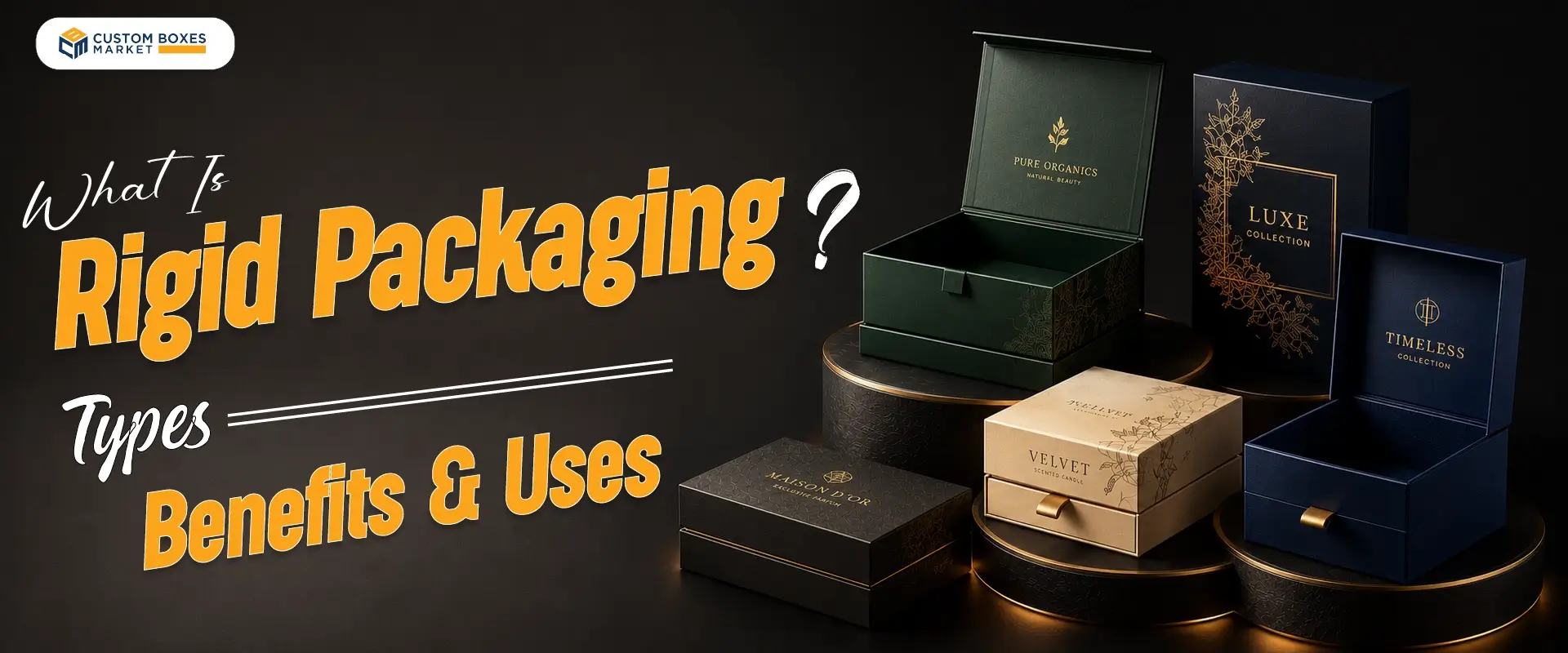
Rigid packaging is the one that is manufactured with stiff materials that can maintain their shape. These boxes do not collapse or bend easily during normal handling and are used for luxury or delicate product packaging. When products need structural support and premium presentation, rigid packaging is used. This packaging does not fold or compress, unlike regular packaging. From rigid chipboard to metal cans and glass containers,all are included in this packaging category.
There are multiple industries that use rigid packaging in various forms, such as the luxury goods and beverage industry. The right selection of packaging depends on the product’s physical characteristics and protection, in addition to supply chain and branding goals.
What Is Rigid Packaging Material?
A rigid packaging material is one that gives a stable, shape-retaining structure. The term does not specify a particular material and is used for multiple types of materials that are resistant to collapsing. There are several examples of rigid materials, such as:
- Glass
- Metal
- Wood
- Plastic
- Rigid paperboard
Rigid setup boxes have paperboard as a base material. Beverage bottles and metal tins are manufactured from glass and metal, respectively. The selection of materials is based on the type of product and the budget of the brand. Some brands also consider temperature variations and the end-of-life of the packaging. The types of rigid packaging are as follows:
Rigid Boxes
This is one of the premium range of options in paper-based packaging. High-GSM material is used in the manufacturing of rigid boxes. These boxes are associated with premium product presentation. Jewelry boxes and premium apparel boxes are usually rigid. Brands create a premium unboxing experience and provide more support than conventional packaging. The common styles they have are:
- Lift-off lid boxes
- Magnetic closure boxes
- Drawer boxes
- Book-style boxes
- Two-piece setups
Plastic Containers
Bottles and jars are a common type of rigid plastic packaging. This material is recyclable and provides an affordable packaging solution for products that need protection. Polyethylene and related polymers are included in this type of packaging. This packaging is valued due to its practicality.
Glass Packaging
This material is strong and provides a barrier against many external factors. Glass does not absorb odours as other packaging materials do. You can use this material to support premium brand positioning. Glass packaging has high weight and breakage risk during transportation and handling.
Metal Packaging
Brands that have high packaging costs and a premium product range go with this option. Steel and aluminum are common metal-based materials that are used for their strength and their barrier properties. From premium food ranges to high-end cosmetics, all are used for their luxury rigid packaging boxes.
Polyethylene Terephthalate Glycol)
PETG resin rigid packaging material is a clear and tough plastic. This material is manufactured with PET and glycol that prevent cloudiness and brittleness of the packaging. Vacuum-formed clamshell and medical device trays are manufactured with this material. PETG remains crystal clear and glass-like even after it is heated and reshaped. This packaging is used for medical products as it can withstand medical sterilization via gamma rays.
How Is Rigid Packaging Different From Flexible Packaging?
The primary difference between the rigid product packaging and flexible and rigid packaging lies in the structural behaviour: rigid material retains its shape under normal conditions,while a flexible material does not. We cannot say which category of material is the best option, as this all depends on the product and application. Rigid material does not change its shape no matter what type of product you have packed. On the other hand, flexible packaging changes its shape based on the packed items and the amount of air in it. Packaging made of rigid material is the best option when you need a luxury presentation and structural protection of the product. On the other hand, flexible packaging is the best option when you need low weight and volume of the packaging.
| Feature | Rigid Packaging | Flexible Packaging |
| Structure | Shape-retaining | Bendable |
| Protection | Generally higher structure | Application dependent |
| Storage | Requires defined space | Often space-efficient |
| Presentation | Premium potential | Lightweight appearance |
| Customization | Structural options | Film-based options |
| Weight | Often higher | Often lower |
| Reuse | Format dependent | Usually limited |
| Shipping | Strong formats available | Often efficient |
Benefits of Rigid Packaging
Custom rigid packaging is more expensive than that of flexible packaging. Nonetheless, it comes with multiple benefits that outweigh the cost. Some of the benefits that you can get are as follows:
- Strong product protection
- Premium presentation
- Shape retention
- Customization
- Reusable potential
What Are the Uses of Rigid Packaging?
Despite its high cost, rigid packaging materials are used across several industries. Their ability to protect the product and keep it in the premium range makes it worthy for many businesses. Such as:
| Food Uses | Cosmetic Uses | Electronics Uses | Pharma Uses |
| Beverage Containers | Perfume Bottles | Device Protection | Rigid Bottles |
| Sauce Containers | Skincare Jars | Impact Protection | Carton Packs |
| Confectionery Packs | Cosmetic Boxes | Dust Protection | Blister Packs |
| Canned Foods | Premium Cases | Accessory Organization | Tamper Evidence |
| Dairy Products | Gift Packaging | Movement Control | Child Resistance |
How to Choose the Right Rigid Packaging
If you have to select the right product packaging, you must go with the product specifications. Make sure to determine the level of protection required by your product. If you are selling fragile or high-value products, then you need stronger packaging material and structure. The second thing that requires consideration is the travelling and e-commerce distribution network. After this, you can evaluate the following:
- Product dimensions
- Product weight
- Material compatibility
- Moisture exposure
- Temperature
- Shelf life
- Shipping conditions
- Brand positioning
- Printing requirements
- Required features
- Production quantity
- Budget
- End-of-life options
Final Takeaway
Rigid packaging is a broad category of packaging that can be manufactured with a variety of materials. There are several reasons that inspire businesses to choose rigid packaging materials, such as brand positioning and product requirements. Brands evaluate several other factors to see whether they need rigid packaging or not. And what type of rigid packaging material will be suitable for them. For the best rigid packaging boxes, you can contact Custom Boxes Market Canada. They provide affordable packaging with a durable structure and lasting protection.